As is often the case for me, when out and about doing “real life” things, I stumble upon analogies that help cement Agile concepts for myself as well as for how I might explain them to others who are part of our Agile in Nonprofits training or coaching programs.
This latest time was as I recently returned to one of my favorite 60-minute rides on Peloton—it’s a “Classic Rock” ride, but it is really a ride through rock history starting in the 70s and ending in the 2000s—fantastic playlist. I first took it in 2022 and have taken it at least once a year since. I don’t plan formally for the yearly cadence, but when I’m sitting down to make my workout plan for the week, about once a year, I think to myself, “Oh, I *love* that playlist—I’ll do this one.”
What I don’t think to myself when I choose that ride is “I’m going to set a PR today!” I think that sort of committed statement is an incredibly ambitious and admirable thought for anyone to think, whether a professional athlete, semi-pro, or passionate individual.
But this year, as I was on this favorite Classic Rock 60-minute ride, I was looking pretty strong. Compared to my past performances for that specific ride, I was in my top 3 (competing only against myself)! As the warm-up for the ride ended, I was already creeping up and I quickly passed my PR, making that current ride my best ever. Well, now the race was on—I was racing….MYSELF. No one else but myself. That feature is part of what I love about Peloton: on any given workout, I can choose to see others’ outputs and where I rank against them, but also on any given workout, I can put blinders up about others’ performances (after all, they are on their own fitness journey) and look ONLY at my current and past outputs.
The ability to look only at your current output compared to your previous outputs—both for a specific workout you’ve done before as well as your overall best for a specific type of workout and time period—reminds me of what we teach in Agile classes about estimation for Agile teams: Leaders and team members should never compare themselves to other teams. They are in their own context, on their own journey. The data, if compared, isn’t apples to apples.
The ride continued and I pulled ahead of my previous 60-minute PR, vacillating between 7 to 10 output points higher than my previous PR. I found myself constantly checking the output ranking screen to ensure I was staying at least that far ahead of myself. My first motivator had been to get PAST my best performance ever for that 60-minute ride, but after I did, my motivator became to stay ahead.
What was interesting, though, was if I felt myself begin to coast or lay off at all—those moments when I was down to only a 7-point lead on my previous PR—I’d get another boost of energy because I wanted to stay ahead. So why couldn’t I achieve more than 10 points higher? Was I truly at my max output? Felt like it! I began to second-guess some of my decisions from earlier in the ride. I thought things like “Perhaps I could have pushed earlier in the warm-up….”
But if I had looked at my past performance data for that ride, I would have known that, empirically, based on my past performance for that specific ride, I have gone up an average of 10 output points each year when I return to this Classic Rock ride. Not 20, not 40. 10. If I wanted to predict my improvement for my most recent ride, 10 was a safe(ish) bet. However, what if I hadn’t slept well the night before? Or felt well-hydrated and fueled for the ride? Should I really have expected that a PR was *always* possible each year I turned on that particular ride? Empirically, I would have been better off looking at the average of my past three rides to think about my realistic plan for that ride (a technique Agile teams use called Yesterday’s Weather).
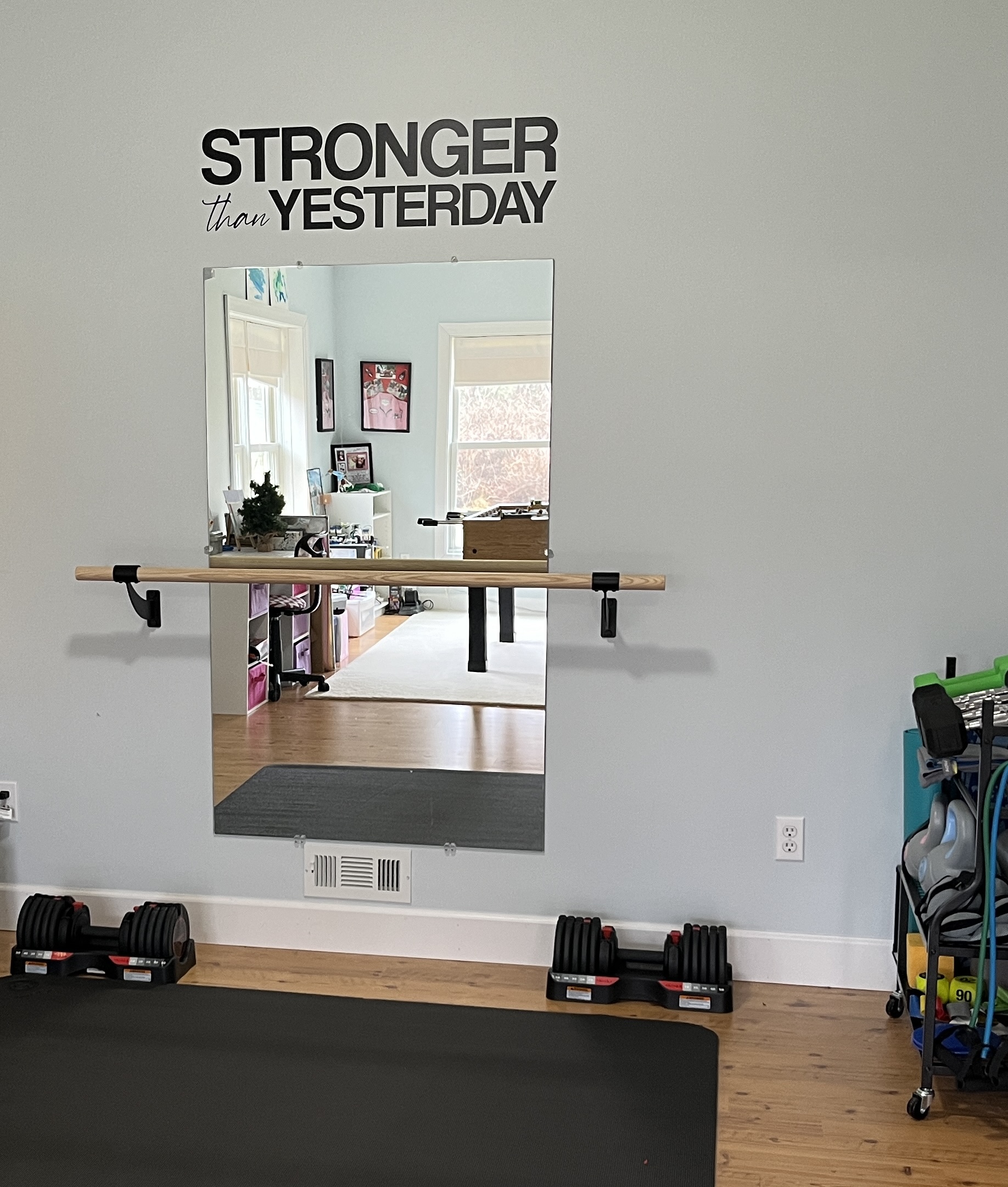
The ride proved that the writing on my home gym wall is right: I am “Stronger than Yesterday.” This particular time, “stronger than yesterday” proved to be another increase in output for one of my favorite rides. But “stronger than yesterday” for an Agile team does not always mean a higher “velocity,” a greater output of work. Sometimes, “stronger than yesterday” can also mean an increase in flexibility or an increase in “muscle memory” for a swarming method.