You have a big goal for your nonprofit, and you are ready to score. But one superstar cannot get you there. You need a team that works together, trusts one another, and keeps moving toward the goal, one play at a time. That is why Agile is like a team sport, and it is how nonprofits create twice the impact in half the time.
Soccer, basketball, volleyball, relay races, rowing: the sport does not matter. The principles of teamwork are the same. Every player does their part, and small, coordinated actions add up to a win.
Every Role Matters, Just Like Every Position on the Field
In any team sport, each player has a role. A point guard cannot score without teammates who set screens. A striker needs a midfielder who finds the open space.
Your nonprofit works the same way. Every team member has a critical part to play in a project. Your organization cannot reach its goal unless each person can do their part and knows how it connects to everyone else’s.
Trust Is the Ultimate Playbook
You have to trust your teammates to be in the right place at the right time. A passer trusts that a teammate will be open. A runner trusts that the next person will be ready for the handoff.
In your nonprofit, that trust breaks down silos and opens up communication. Agile gives teams simple ways to build it, such as quick regular check-ins and honest conversations about what is working and what is not. Teams that do this adapt faster and build the confidence to succeed.
Agile Is a Playbook, Not a Single Play
No coach runs the same play every time. They pick the play that fits the moment, the opponent, and the players on the field.
Agile works the same way. It is a collection of plays, and each one helps with a different challenge. One might help your team set priorities. Another might improve how you share work or catch problems early. Some will fit your team well. Others will not, and that is fine.
Do Not Try to Learn Every Play at Once
Here is where many teams go wrong. They try to run the whole playbook at once. Every player is overwhelmed, nothing sticks, and everyone concludes that Agile does not work.
No team learns an entire playbook in one practice. Pick one play, and run it for a few weeks. Then ask your team three questions. Did it help? What would we change? Should we keep it, adjust it, or bench it?
Your team is not any other team. A play that works for a large nonprofit may need adjusting for a team of three. The only way to find out is to try it with your people.
Making a Big Impact, One Play at a Time
A team does not win by scoring on every possession. They make steady progress, one play at a time. Agile is the same. It is about small, continuous improvements rather than tackling everything at once. That approach helps your team deliver value to your community and stakeholders faster, at a pace you can sustain.
Get the Playbook
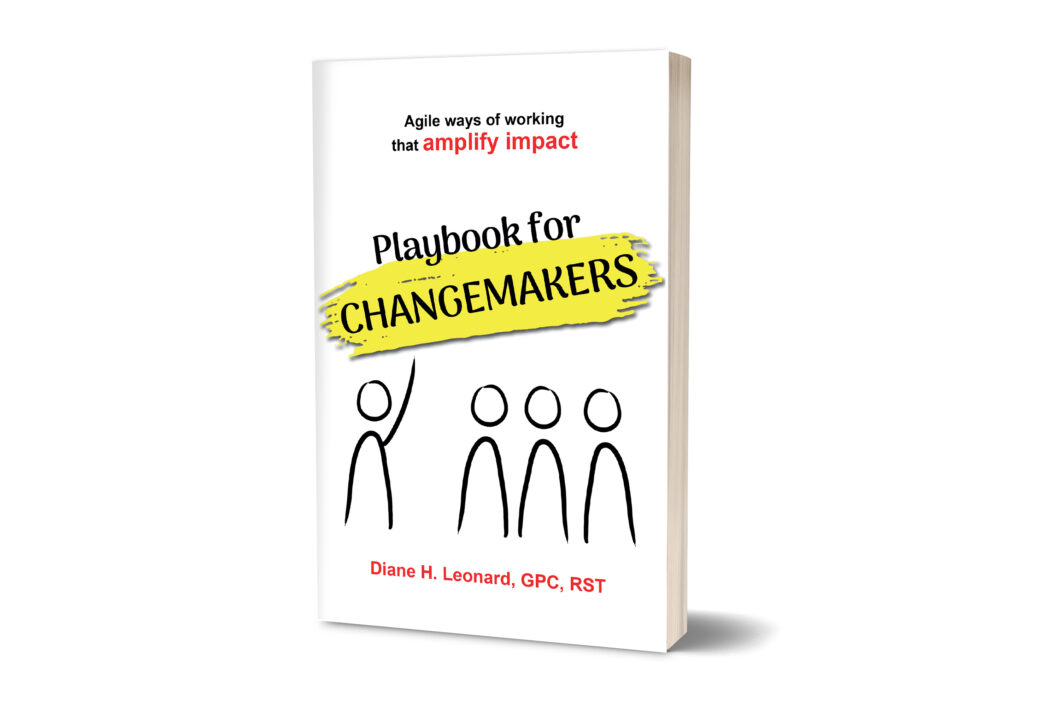
That is exactly why I wrote Playbook for Changemakers: Agile Ways of Working That Amplify Impact. It guides you through adopting proven Agile approaches, one play at a time, with practical examples from nonprofit teams plus templates and guides you can use right away.
The book releases on December 1, 2026, and the Kindle edition arrives one day early, on November 30. When you pre-order, you can claim two bonuses by filling out the form on the book page:
- The Ultimate Changemaker Resource Vault: the templates, checklists, and guides referenced throughout the book.
- A ticket to the live launch workshop on December 1 at 12 pm ET: Why Your Team Has Too Many Priorities (and the Plays That Fix It).
Pre-order Playbook for Changemakers before December 1st to claim your bonuses!